
Intel Missing Out
The reason why it is so difficult for existing firms to capitalize on disruptive innovations is that their processes and their business model that make them good at the existing business actually make them bad at competing for the disruption.
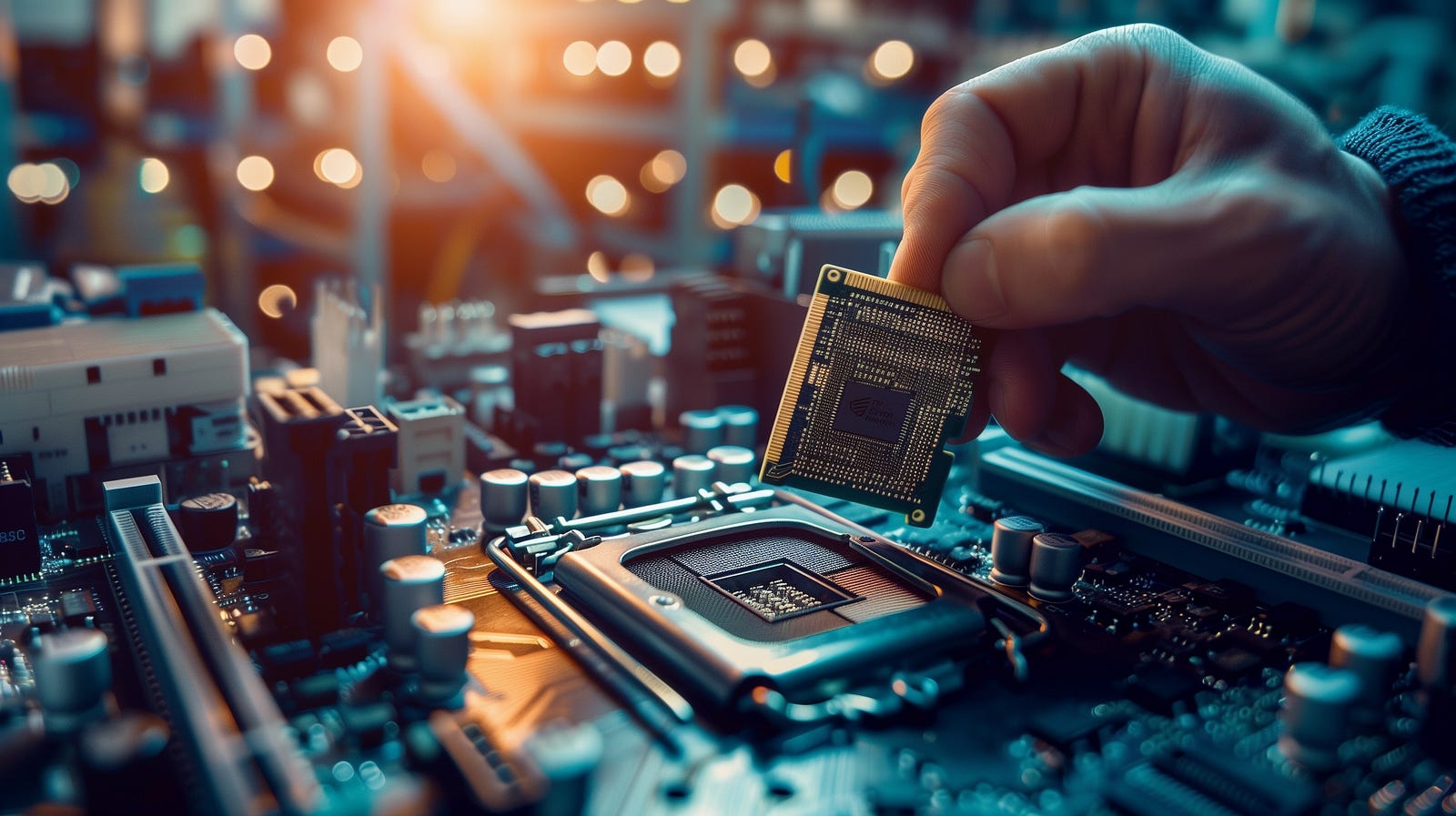
The latest in Intel Corporation news is the largest stock decline since 1982. Various articles covering this topic indicate that Intel missed out on the AI trend, but like many things some of the history is a bit more nuanced than that. Intel, like many high-technology companies, has missed out on more than one trend. Microsoft, for example, missed out on modern mobile phones despite a lead into 3G wireless with phones like the Samsung Blackjack (featuring Windows Mobile 5.0). Microsoft Azure is now the second leading cloud provider and Microsoft has moved on to succeed somewhere else. Similarly, Intel has missed out on AI, and it may take Intel another generational computing trend to bring Intel back on top.
When I joined Intel in 2000, the company was transforming (i.e. deeply spending) to become an Internet company. The company was diversifying their operations under their third CEO, Craig Barrett. The company slogan was "Yes." Hiring was like busing them in from colleges directly with lots of "yeses" and I would later quip that my job interview was merely an English reading and writing competency test. Not true, but there was a lot of hiring.
By 2000, Intel had two competing data center business units already doing what would later become "Cloud Computing," Intel Online Services and the other one whose name I now forget. Of course, the NASDAQ bubble collapsed that year, and Intel began divesting and refocused on the core business at the time client/server computing. Then laptops with wireless chips (Intel Centrino) became mainstream and mobile platform sales exploded as well.
After Craig Barrett came Paul Otellini, Brian Krzanich, Bob Swan and now Pat Gelsinger. The slogans went from first "Intel Delivers" to later "Yes", "Leap Ahead", "Sponsors of Tomorrow", "Look Inside", "Experience What's Inside", "What's Inside Has Never Mattered More" and now "Do Something Wonderful." The CEOs became on average less technical and more business oriented, and profits were intense (until Gelsinger returned). Intel's near monopoly power (and duopoly with Microsoft called Wintel by some) allowed it to pour money into researching the future. Otellini was once even quoted that "Intel's history is to obsolete its old products with its next products."
In roughly 2005, Intel had StrongARM and invested in mobile ARM based processors and platforms but ended up exiting the business just before the launch of the iPhone in 2007. Yet over the next few years, Intel then spends vast sums of money on "Mobile Internet Devices." These were attempts to shrink the existing x86 architecture into mobile devices with the McCaslin, Menlow and Moorestown platforms. As Clayton Christensen could probably have predicted, the attempt to move down market failed. The release of the iPad in January of 2010, was when I saw the writing on the wall. ARM was going to continue to grow up and push Intel out of the bottom of the computing market. Profits at the top of the market would be extreme for a time, but then ARM would grow into laptops, desktops and servers. This growth has happened, if about half as quickly as I imagined then. We now have cloud ARM server chips from Google, Amazon and Microsoft. These hyperscale providers only provide 5% or so of their compute now with ARMs chips, but the trend is up.
By 2009–2010, Intel Labs featured a single-chip cloud computer (and Tera-Scale computing) and all the talk was about scale-out (horizontal) computing, cloud software architectures and the like. Intel project Larrabee was a cutting-edge CPU/GPU design unveiled in 2008, anticipating the GPU/AI revolution still in play today. At this time, the Labs was demonstrating ray-traced gaming, and everyone was talking about "Big Data." But Larrabee was cancelled in May 2010 (coincidentally the month I left Intel). Larrabee was Pat Gelsinger's baby and his sudden departure from Intel in 2009 left the project without support from corporate leadership. Gelsinger sees computing in generational architectures and foresaw parts of the computing landscape today then. Spending billions on Larrabee without current revenue or market share was something no other Intel executive seemed to want to sponsor. The leadership after Gelsinger left maximized profits but set up a classic Innovator's Dilemma. As he later stated in an interview with the Computer History Museum, Nvidia wouldn't have taken all the market share in GPU/ML/AI and its market cap wouldn't be where it is if Intel had succeeded in that game. Intel's market cap is $91.8 Billion today. Nvidia's is $2.6 Trillion (for now at least).
Pat Gelsinger is now faced with a 1982-style Intel pivot moment, 1982 being roughly when Intel transitioned from a memory company to a processor company. He has now split the company in two internally, with a Fab and a Fab-less design company and is going to trim out all the fat from everywhere else. The rumor is that cuts will hit hard in the Sales and Market Group and R&D (I assume Intel Labs), where I spent the majority of my Intel decade so long ago now. The opportunity to plow profits into an emerging space is over and now Intel is behind. Intel is now betting on a cutting-edge process, Intel 18A and customer wins that include ARM based server chips now designed by Microsoft. If anyone can lead Intel back to the top of the hill it is Gelsinger, but it may take a long time and the next generational computing trend to get there.