
The Intel Disruption Game, or Uh-Oh It's ARM
Strategic inflection points are not always easy to spot. But you can’t wait until you do see one to start preparing for it.
In 2009, I walked into the Qualcomm booth at Mobile World Congress. My conference badge outed me as an Intel man, but I had a great conversation with whomever was manning the both at the time. It was the end of the show and he said I was the only Intel guy that had stopped by. He thought we should pay more attention to them. I agreed.
ARM presented the following slide at Computex that year:
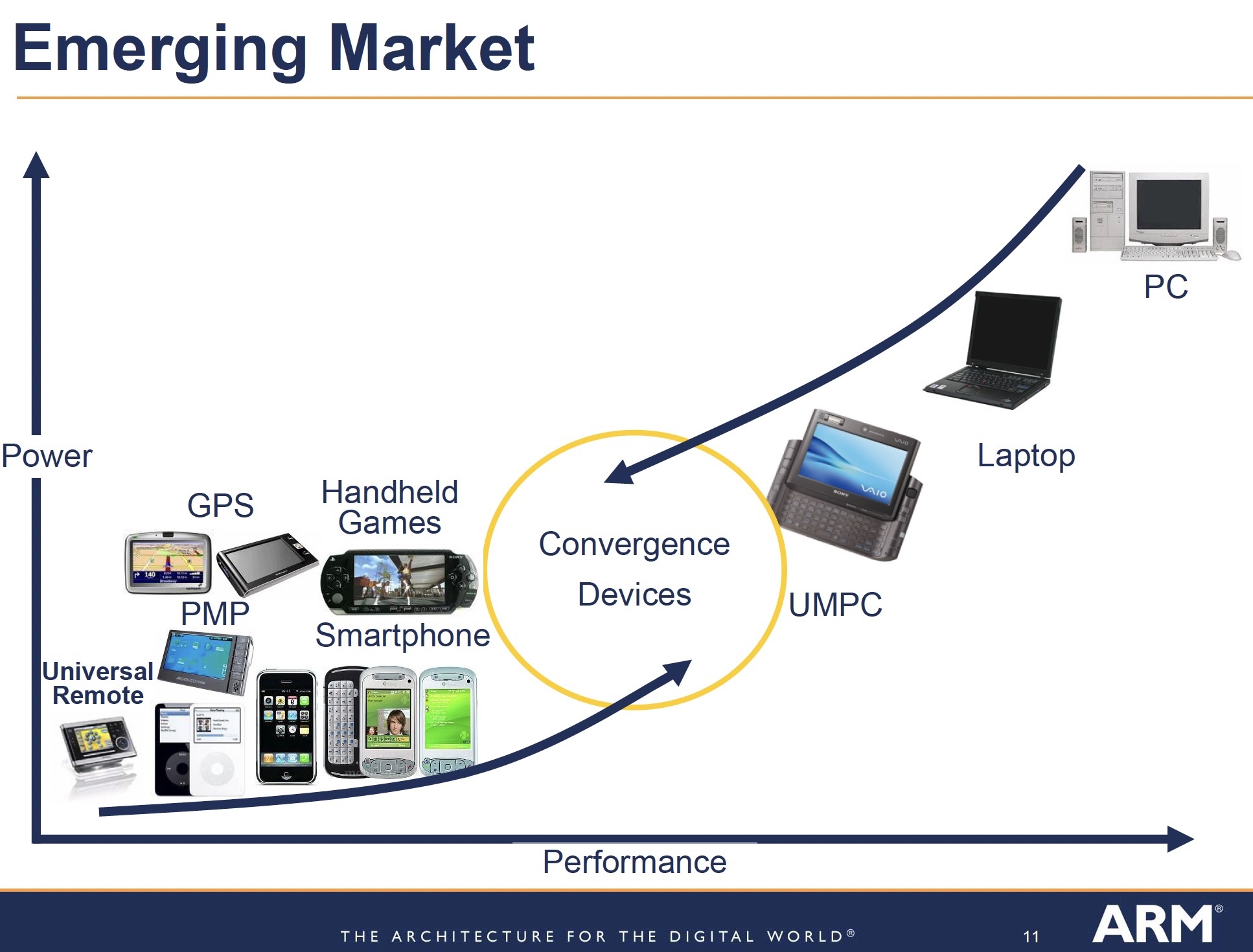
This power/performance curve screamed at me. Disrupters come from the bottom, as Clayton Christensen taught us. As I discussed previously, Intel was shrinking PCs into mobile, but ARM was growing smartphones.
In the now deep past Intel was the disruptor and played its own disruption game on SUN, HP and others. The Pentium PRO released in 1995 and grew Intel into the workstation and server market. UNIX based RISC hardware was then used for CAD, enterprise services and high performance computing. Intel innovated rapidly and released the Pentium II, III and Xeons and grew into a real enterprise player and eventually winner. Windows NT evolved into Windows 2000, and Linux grew into a new enterprise option. Intel + Microsoft = Wintel crushed the legacy UNIX vendors. This was a classic low-end to mainstream replacement move.
By 2010 I was convinced the Arm/TSMC platform was going to eat Intel's lunch, and I guessed it would take 5-7 years. It took double that - so don't ask me for stock tips. Moving from Converged Devices into Laptops was the next move. In 2020 Apple announced the M1 chip, offering a massive leap in efficiency and performance-per-watt. By 2022, The new Apple line was outperforming most Intel laptop CPUs.
Qualcomm's Snapdragon X Elite (2024) brings other players into the Intel disruption game, including Microsoft and Dell.
ARM servers are next. I won't guess a date as I'm not good at that. I will note however that Renee James (Intel President from 2013-2015) is the Chairman and CEO of Ampere Computing, an ARM-based cloud server company. 64-bit ARM server processors, TSMC fabrication, hyperscale workloads like AI, Big Data, etc. etc. etc.
So the disruption game continues.